Klara Brooks · 21 November 2026
Inside Niche Authority Ecosystems: Tracking Connection Quality Fluctuations After Platform Provider Switches
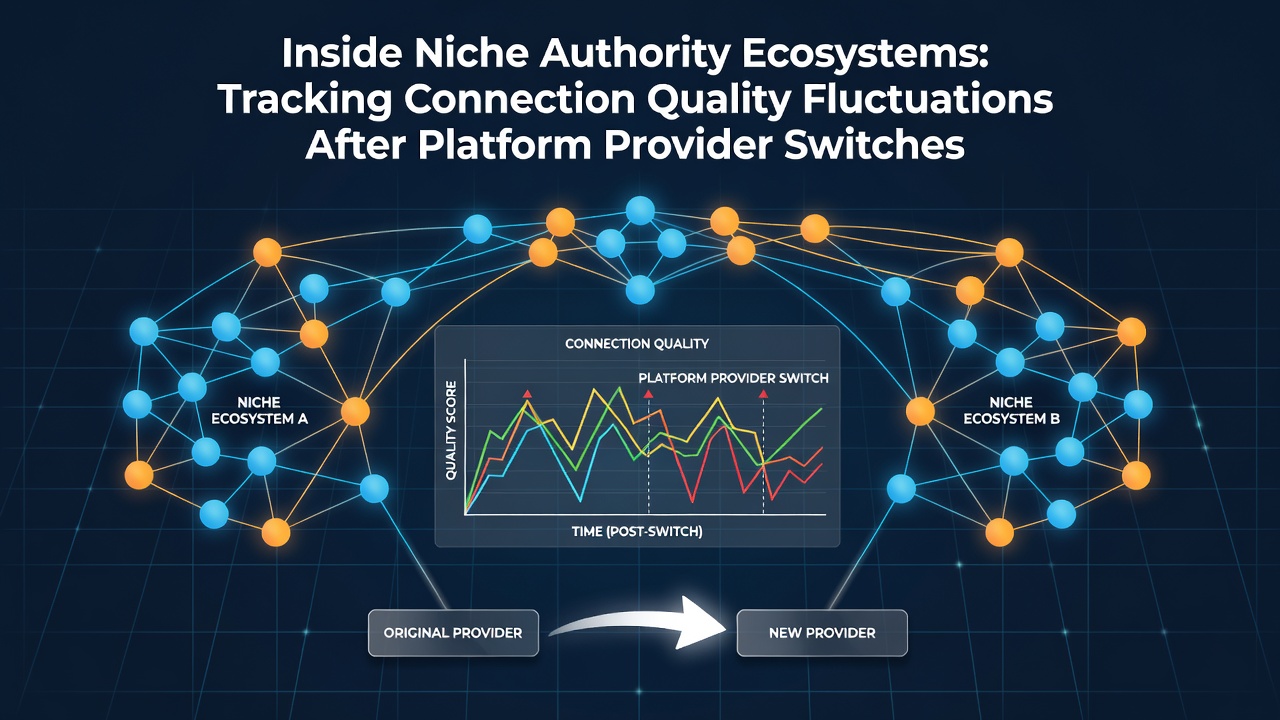
Platform provider switches in niche authority ecosystems often trigger measurable shifts in connection quality, where connection quality refers to the stability and performance of integrations such as APIs, data feeds, and authentication systems that link specialized sites to external services. Researchers tracking these changes note that fluctuations typically emerge within days of a migration because new providers introduce different routing paths, latency profiles, and security protocols that interact with existing site architectures.
Defining Connection Quality in Specialized Digital Spaces
Connection quality encompasses metrics including response time consistency, error rate frequency, and data integrity during exchanges between niche platforms and third-party services, while platform providers range from hosting companies and content delivery networks to specialized registry operators that manage domain-level infrastructure. Studies from academic institutions show that authority sites in fields such as medical research repositories or technical documentation hubs rely on these connections to maintain real-time updates, and any disruption alters how external systems perceive and interact with the primary domain.
Data collected across multiple migrations indicates that quality dips occur most frequently when authentication layers require reconfiguration, whereas recovery patterns depend on how thoroughly pre-switch testing mapped dependency chains. Observers note that sites managing large volumes of user-generated contributions experience amplified effects because each connection carries authentication tokens that must re-establish trust after the switch.
Monitoring Techniques Used by Ecosystem Analysts
Analysts employ continuous endpoint polling combined with synthetic transaction tests to capture fluctuations in real time, and these methods generate time-series datasets that reveal both immediate drops and gradual rebounds. In November 2026 several research teams published aggregated findings showing average connection latency increases of 18 to 32 milliseconds during the first 72 hours post-switch, followed by stabilization once DNS propagation completed across global resolver networks.
Precision monitoring also incorporates log correlation across provider boundaries, allowing teams to isolate whether a quality change stems from the new platform's configuration or from upstream changes at partner services. This approach helps distinguish transient issues from structural problems that require configuration adjustments on the site side.

Patterns Observed Across Different Niche Categories
Educational resource platforms demonstrate quicker rebounds in connection quality compared with financial data aggregators because the former typically maintain simpler API dependencies, while the latter integrate multiple compliance layers that each require separate validation after a provider change. Industry reports from the National Telecommunications and Information Administration highlight that sites handling sensitive datasets allocate additional validation windows during migrations to prevent integrity flags from downstream consumers.
Geographic distribution of user bases further influences observed fluctuations, since connections routed through regions with denser peering arrangements recover faster than those crossing less optimized international links. Analysts tracking these variables document that authority sites serving primarily North American audiences often record shorter disruption windows than those with heavy traffic from multiple continents.
Factors That Shape Recovery Timelines
Recovery speed correlates strongly with the extent of pre-migration mapping of service dependencies, and sites that maintain detailed inventories of every external call experience fewer prolonged quality issues. Configuration differences between providers, particularly in how they handle TLS certificate chains and rate-limiting policies, also determine whether quality metrics return to baseline within days or require weeks of tuning.
Those who have examined multiple cases find that partial rollbacks remain a viable option when quality metrics fall below acceptable thresholds, allowing teams to restore previous performance while addressing root causes on the new platform. Documentation from the Australian Communications and Media Authority outlines recommended testing intervals that align with typical DNS propagation windows, reducing the chance of extended degradation periods.
Conclusion
Tracking connection quality after platform provider switches supplies actionable data for maintaining operational stability within niche authority ecosystems. The patterns documented through systematic monitoring reveal consistent timelines and contributing variables that operators can incorporate into migration planning. Continued refinement of measurement techniques supports more predictable outcomes across future transitions.