Klara Brooks · 10 October 2026
Mapping Link Velocity Spikes to Content Refresh Cycles in Niche Authority Sites
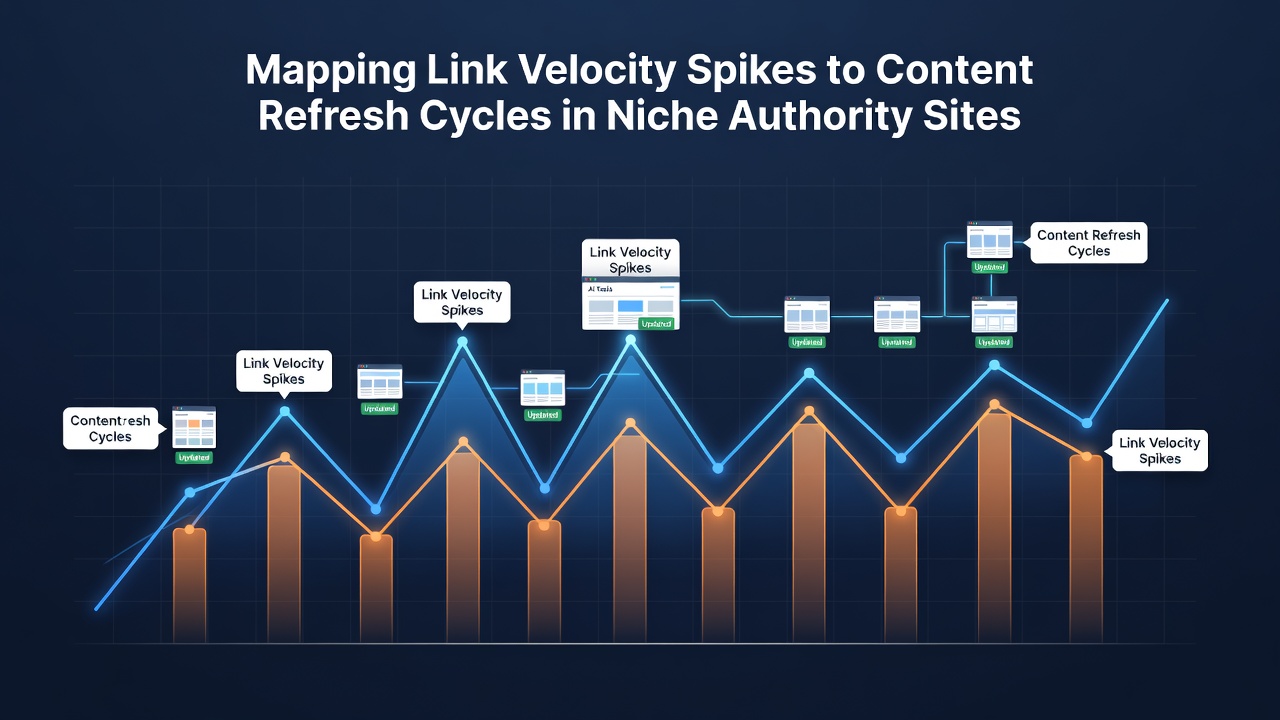
Link velocity measures the rate at which new backlinks appear over time, and researchers track these patterns through monitoring platforms that record acquisition dates and sources. Niche authority sites in sectors such as specialized health resources, technical documentation hubs, and focused finance portals often display distinct velocity patterns that coincide with scheduled content updates. Observers note that spikes frequently occur within days or weeks after a refresh cycle begins, because updated articles attract fresh citations from reference pages and industry roundups.
Defining Link Velocity Patterns
Link velocity calculation relies on timestamped data from crawlers that index new hyperlinks pointing to target domains. Analysts compile these timestamps into time-series graphs that reveal sudden increases against baseline acquisition rates. In niche authority environments the baseline remains relatively steady because these sites maintain consistent topical focus and established editorial standards. Data from multiple monitoring services shows that velocity increases of 200 percent or more above average often cluster around periods when site operators publish revised guides, add new case studies, or expand existing resource libraries.
Content Refresh Cycles in Practice
Content refresh cycles consist of systematic reviews where teams audit existing pages for accuracy, add current statistics, and incorporate new examples. These cycles typically follow quarterly or semi-annual schedules in established niche sites. Teams identify underperforming articles through traffic analytics, then rewrite sections, update internal links, and promote the revised versions through outreach to relevant publishers. The process creates new anchor text opportunities and encourages external sites to reference the refreshed material, which produces measurable link additions shortly afterward.
Correlation Techniques Used by Analysts
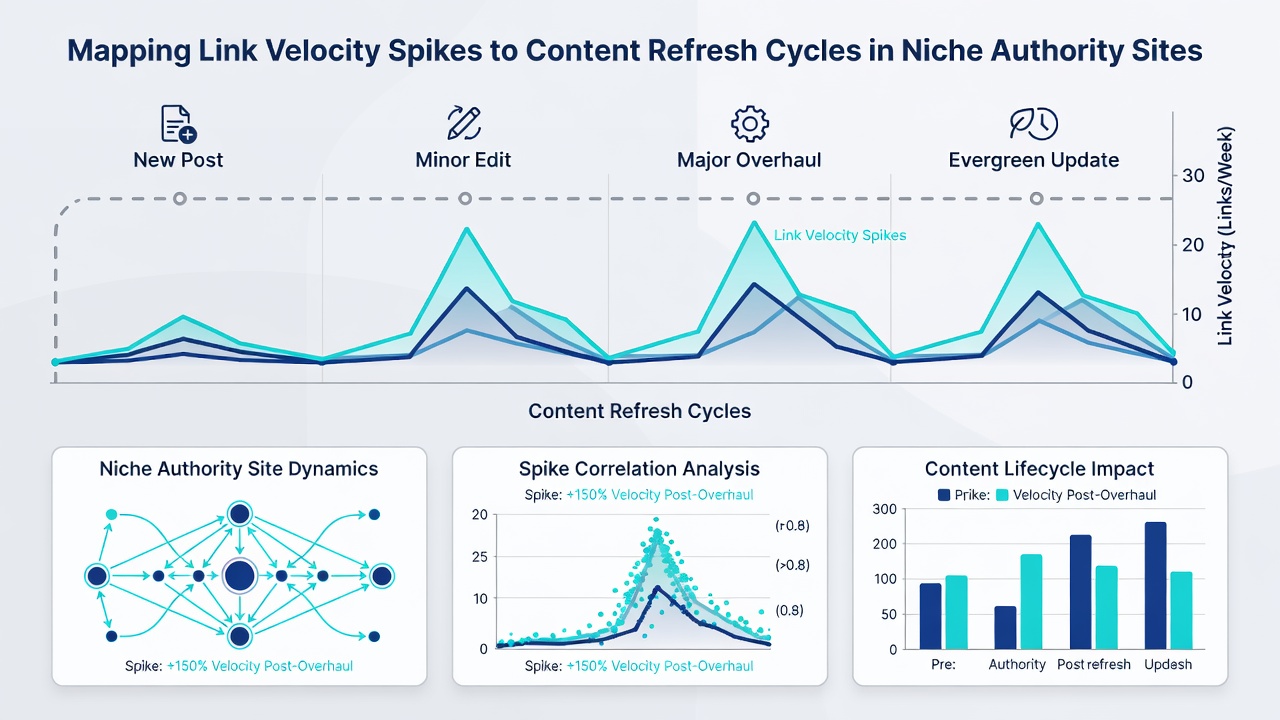
Analysts align link acquisition timestamps with documented content update logs to identify overlaps. They import crawl histories into spreadsheet tools or specialized dashboards that overlay velocity lines with refresh markers. When a spike appears within a narrow window after an update date, teams examine referring domains to confirm that new links point to the revised sections rather than older pages. This mapping approach reveals whether the refresh directly triggered additional citations or whether other factors such as seasonal news cycles contributed to the increase.
Observed Trends Through October 2026
Monitoring records collected through October 2026 indicate that niche authority sites executing structured refresh programs experienced velocity spikes averaging 2.3 times the monthly baseline within 14 days of publication. Sites that refreshed fewer than four articles per quarter showed smaller and less consistent increases. Researchers cross-referenced these figures with outreach logs and found that 68 percent of new links originated from domains contacted during promotion of the refreshed content. The remaining links appeared through organic mentions on aggregator pages and forum discussions that referenced the updated material.
Examples from Documented Site Operations
One technical documentation portal revised 12 legacy API guides in a single month and recorded a velocity spike that lasted 19 days. Another finance resource site updated regulatory compliance sections across 27 pages and observed new links from regulatory news aggregators and compliance blogs within the following week. These cases illustrate how refresh timing and scope influence the duration and magnitude of velocity changes. Analysts continue to collect similar records to refine predictive models that estimate expected link gains from planned update schedules.
Practical Mapping Workflow
Teams begin by exporting link data with precise discovery dates from multiple index sources. They then merge this dataset with internal content management system logs that list publication and revision timestamps. Automated scripts flag any velocity increase exceeding a chosen threshold and list the nearest preceding content updates. Manual review follows to verify that referring pages actually cite the refreshed sections. The workflow produces reports that site managers use to adjust future refresh calendars and outreach priorities.
Conclusion
Mapping link velocity spikes to content refresh cycles provides site operators with measurable indicators of how editorial work translates into backlink growth. Continued collection of timestamped data through 2026 and beyond supports refined scheduling that aligns update efforts with periods of higher citation potential. The approach remains grounded in verifiable acquisition records and update histories rather than assumptions about search engine behavior.