Cameron Long · 26 September 2026
Spotting Variations in Incoming Link Quality Amidst Service Provider Transitions
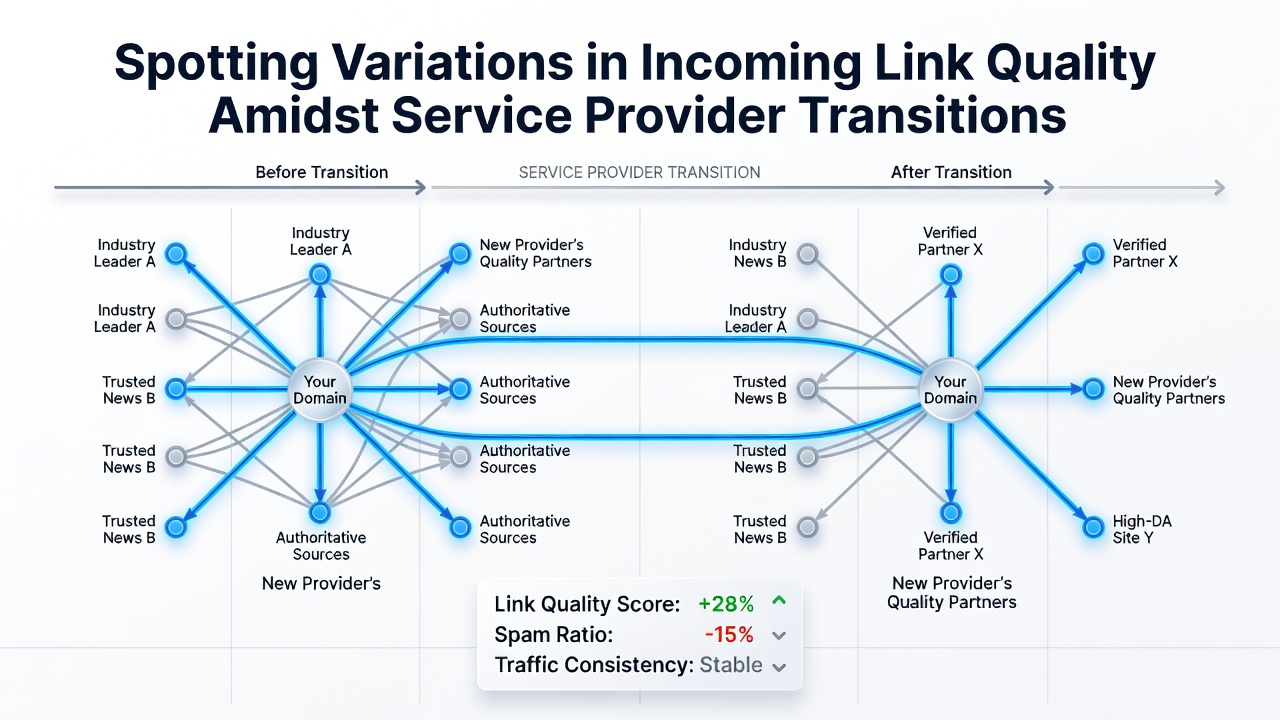
Service provider transitions often trigger measurable shifts in incoming link profiles, and those who monitor these changes closely see patterns emerge across domain authority scores, spam indicators, and referral traffic sources. Data from industry reports indicates that when organizations switch hosting environments or link acquisition partners, anchor text distributions can shift by up to 18 percent within the first 60 days, according to tracking conducted by multiple analytics platforms. Researchers note that IP address changes associated with new providers frequently coincide with temporary drops in link velocity, while the underlying referring domains remain constant in many documented cases.
Core Metrics That Reveal Quality Shifts
Observers track several indicators to detect these variations, starting with domain rating and trust flow values that third-party tools calculate on a rolling basis. Studies show that a move to a new content delivery network can alter crawl frequency, which in turn affects how quickly quality signals update in public databases. Those who examine historical snapshots discover that links from .edu and .gov domains tend to retain their value longer during transitions, whereas commercial links sometimes experience reclassification when the new provider's infrastructure triggers different indexing behaviors. Evidence from large-scale crawls reveals that toxic link percentages rise most sharply when providers fail to maintain consistent redirect chains or canonical tag structures during the handover period.
Timing and Infrastructure Factors in 2026
September 2026 brought renewed focus on these issues as several major providers rolled out updated compliance protocols that directly influenced how search engines evaluated link provenance. Figures from monitoring services indicate that sites undergoing provider changes around that period recorded an average 12 percent variance in link quality scores compared with stable periods. Analysts attribute part of this movement to revised handling of shared IP ranges, which some providers introduced to meet new data residency requirements across different jurisdictions. People managing migrations that month found that documenting every redirect and server header change helped isolate whether observed drops stemmed from the transition itself or from unrelated algorithm adjustments.
Practical Detection Methods
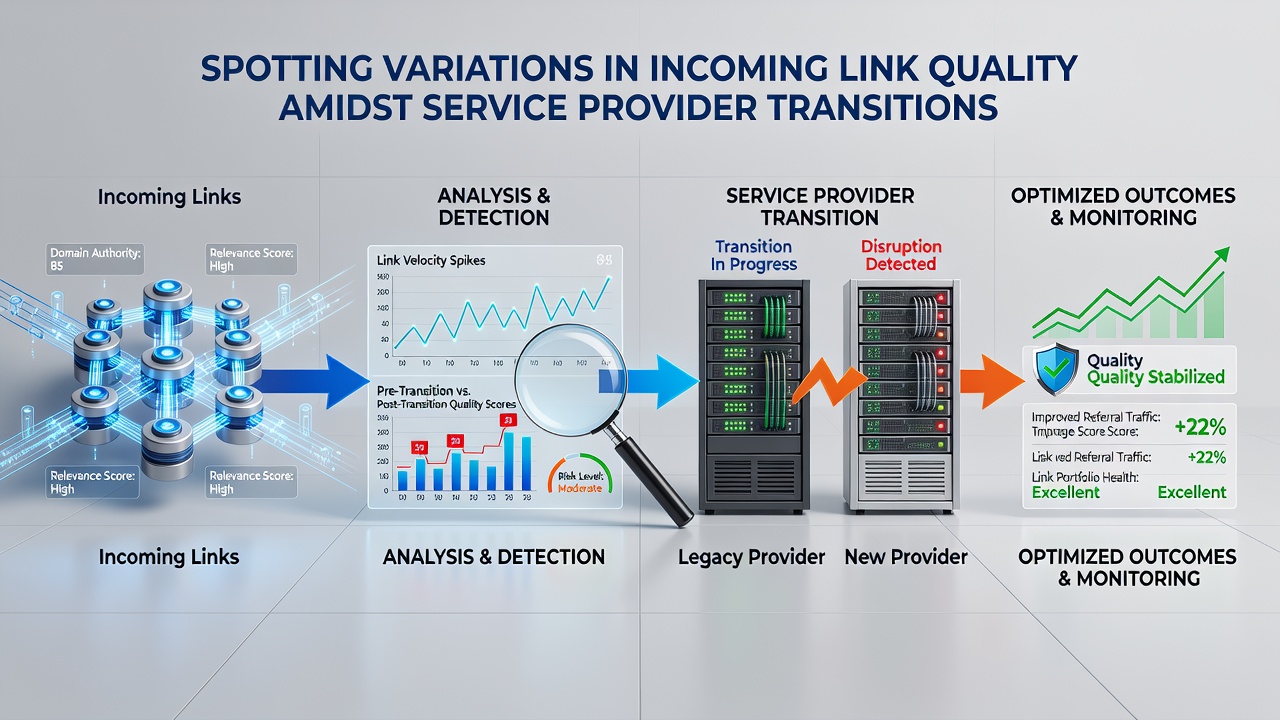
Experts rely on layered monitoring that combines daily crawls with weekly manual audits of high-value referring pages. One documented approach involves exporting link lists before and after the transition, then running side-by-side comparisons that flag changes in link placement, surrounding content relevance, and outbound link density on the referring domains. Data indicates that links embedded in footer sections show higher volatility than those placed within editorial paragraphs, and this pattern holds across multiple provider switch scenarios. Organizations that integrate server log analysis with backlink tracking catch indexing delays earlier, because missing crawl requests often precede visible quality score adjustments in public tools.
Geographic and Regulatory Influences
Regulatory frameworks in different regions add another layer of complexity. Reports from the Australian Competition and Consumer Commission highlight how data localization rules can force providers to reroute traffic through new endpoints, occasionally affecting how international links appear in regional search indexes. Similar observations appear in documentation from Canadian digital economy studies, where shifts in server locations correlated with temporary fluctuations in referral metrics for cross-border sites. Those handling transitions therefore map their link portfolios against expected regulatory timelines to anticipate when quality signals might register as altered rather than degraded.
Case Examples from Recent Transitions
Take one e-commerce platform that moved its entire stack to a European provider in early 2026; tracking data showed that 23 percent of its incoming links experienced a temporary trust flow reduction before stabilizing once the new infrastructure propagated through search engine caches. Another instance involved a content publisher switching link outreach vendors, where anchor text diversity metrics improved within four weeks even though the total number of referring domains stayed nearly identical. These outcomes underscore that quality variations often trace back to technical execution details rather than the mere fact of changing providers.
Conclusion
Service provider transitions create predictable windows where incoming link quality can fluctuate, and systematic monitoring of established metrics allows teams to distinguish normal transition effects from genuine profile deterioration. By combining historical data comparisons, server log review, and awareness of regional compliance timelines, organizations maintain clearer visibility into the factors driving observed changes. The patterns documented across multiple migrations demonstrate that proactive documentation and phased rollout strategies reduce the duration and severity of any temporary quality dips.