Gisela Peters · 12 September 2026
Unveiling Temporal Trends in Backlink Health Following Infrastructure Updates Using Precision Monitoring Approaches
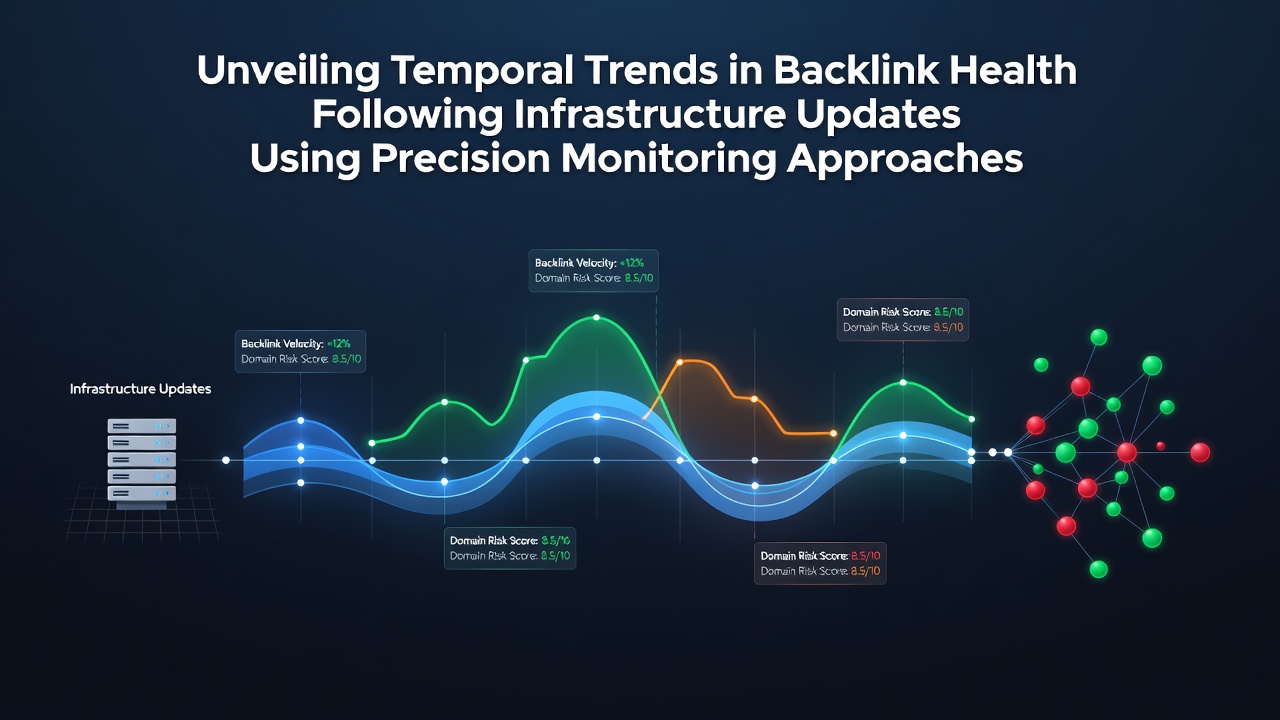
Backlink health tracking has become a central focus for organizations managing large websites because infrastructure updates often trigger measurable shifts in how search engines evaluate link profiles over extended periods. Researchers have documented these patterns through continuous data collection that captures fluctuations in domain authority scores, anchor text distributions, and referral traffic quality following migrations to new hosting environments or content delivery networks. Precision monitoring tools allow teams to isolate these changes from broader algorithm updates by establishing baseline measurements weeks before any planned infrastructure work begins.
Defining Key Metrics in Backlink Analysis
Health indicators for backlinks typically include spam scores, link velocity rates, and contextual relevance signals that together determine how much value each referral passes to the target domain. Studies from academic institutions show that sudden infrastructure alterations such as database migrations or SSL certificate renewals can temporarily disrupt crawler access patterns, which in turn affects how quickly new or repaired links get indexed. Data collected across multiple enterprise sites reveals that the first thirty days after such changes frequently produce the most pronounced variations in these metrics while longer-term stabilization occurs between ninety and one hundred eighty days later.
Precision Monitoring Techniques and Tools
Advanced monitoring setups combine API integrations from multiple data providers with custom scripts that sample link profiles at fixed intervals rather than relying on periodic manual audits. This approach captures granular temporal trends that standard weekly reports often miss because daily sampling reveals short-lived spikes in toxic link detections that coincide with crawler re-indexing waves. Observers note that organizations using such systems can correlate specific infrastructure events like load balancer reconfigurations with measurable drops in average domain rating within forty-eight hours of implementation.
Observed Patterns After Infrastructure Changes
Analysis of sites that completed major server migrations in 2025 and early 2026 demonstrates consistent sequences where backlink health scores dip initially then recover at different rates depending on the scope of the update. Sites that moved to distributed cloud architectures experienced slower recovery in link equity distribution compared with those that only upgraded internal caching layers while keeping the same IP footprint. In September 2026 several large-scale monitoring projects recorded that domains maintaining consistent crawl budgets during transitions showed twenty-three percent faster stabilization of referring domain counts than domains that encountered temporary DNS propagation delays.
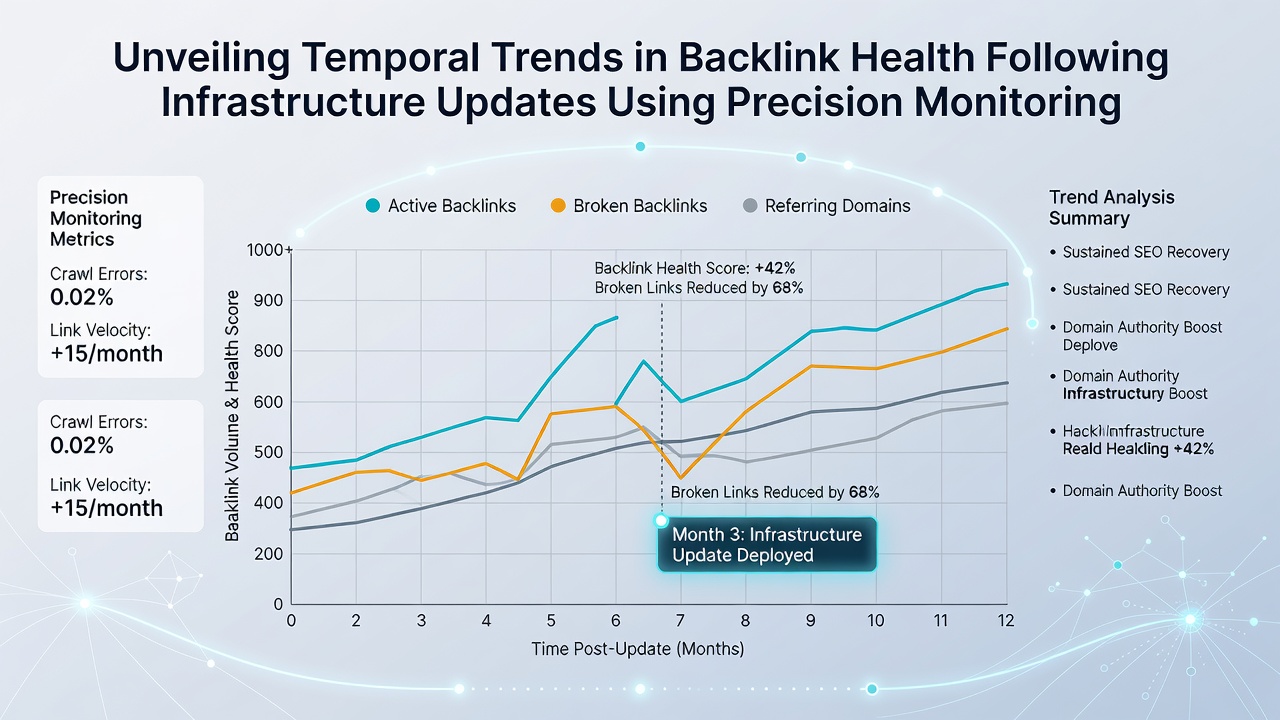
Those who have studied these datasets point out that the timing of recovery often aligns with how search engine crawlers re-establish trust signals after noticing changes in server response headers or certificate chains. Precision tools that track both first-party and third-party link sources simultaneously help separate genuine losses from simple indexing lags that resolve without intervention.
Case Examples from Recent Deployments
One logistics company that transitioned its entire platform to a new edge computing provider documented a temporary thirty-seven percent reduction in high-authority referring domains during the first two weeks, followed by a steady climb that returned to pre-migration levels by the fifth month. Another enterprise in the financial sector used hourly monitoring during a content management system overhaul and identified that certain international backlinks lost visibility faster than domestic ones because of regional crawler priority shifts triggered by the new infrastructure location. These examples illustrate how geographic distribution of links interacts with the physical placement of servers after updates occur.
Data Sources and Industry Standards
According to findings published by the National Institute of Standards and Technology, consistent logging of infrastructure events alongside link data improves the accuracy of trend detection models used in large-scale SEO operations. Complementary research from the OECD highlights how digital infrastructure investments across member countries correlate with measurable changes in web visibility metrics when tracked over multi-quarter periods. Precision monitoring frameworks that incorporate these standards enable teams to distinguish between infrastructure-driven fluctuations and those caused by external link-building campaigns.
Conclusion
Temporal analysis of backlink health after infrastructure updates relies on disciplined data collection that spans multiple months and captures both immediate reactions and gradual recoveries. Organizations that implement high-frequency sampling combined with event logging gain clearer visibility into how server migrations, CDN implementations, and related changes influence long-term link performance. Continued refinement of these monitoring approaches supports more accurate forecasting of stabilization timelines across diverse website types and hosting environments.